June 16th, 2009

The Dixie Cups

Dixie Cups, Red Bird, Pye, Dr. John, Wild Tchopitulas, James 'Sugar Boy' Crawford

Listen: ko Iko / The Dixie Cups
ko Iko / The Dixie Cups

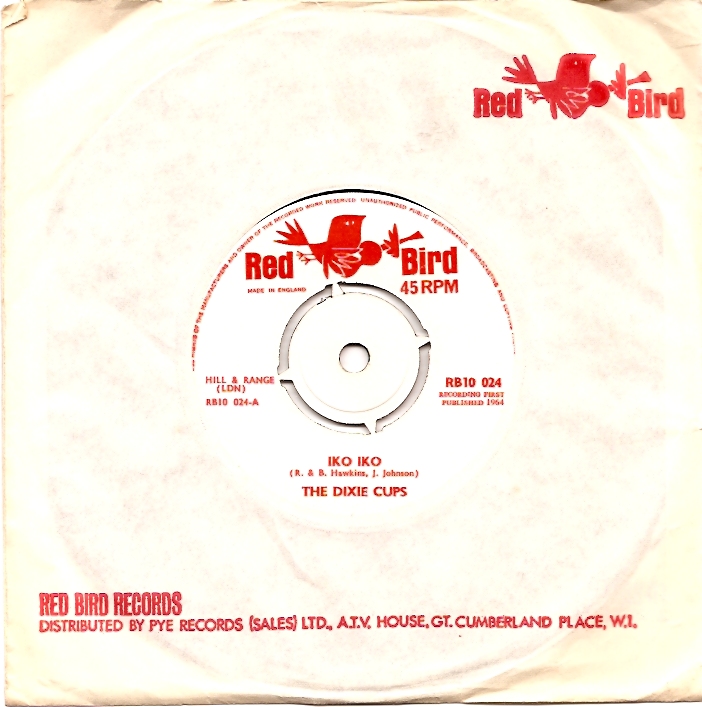
This used to sneak on to my local Top 40 station every once in a while, but not near enough. Although appearing to be a mid-chart hit (it struggled to #20 in ’65), the song has proven seminal. Repeated film, TV and commercial uses turned this percussion (bottles and screw drivers apparently) strut and chant into a multi platinum seller, now straddling four decades.

The Dixie Cups brought a lot of colorful shaking to this year’s Rhythm & Blues Foundation event. You couldn’t mistake them as they made their entrance, looking every bit as exotic as that first time on AMERICAN BANDSTAND running through ‘Iko Iko’.

Even their website sparkles like no other.

June 15th, 2009

Matt & Kim

mattkimlessons, Matt & Kim, Matt and Kim, Fader Label, Nettwerk, KCRW, Hot Butter

Listen: Cinders (Live) / Matt & Kim MattKImCindersLive.mp3

‘Cinders’ may be to this millennium what Hot Butter’s ‘Popcorn’ was to the last. Yet with all the open mindedness in today’s society, I can guarantee you it doesn’t spill over to radio programming. Don’t expect to hear ‘Cinders’ on a pop station anytime soon. A great session for KCRW captured the manic mayhem of ‘Cinders’ live, making for a perfect B side.

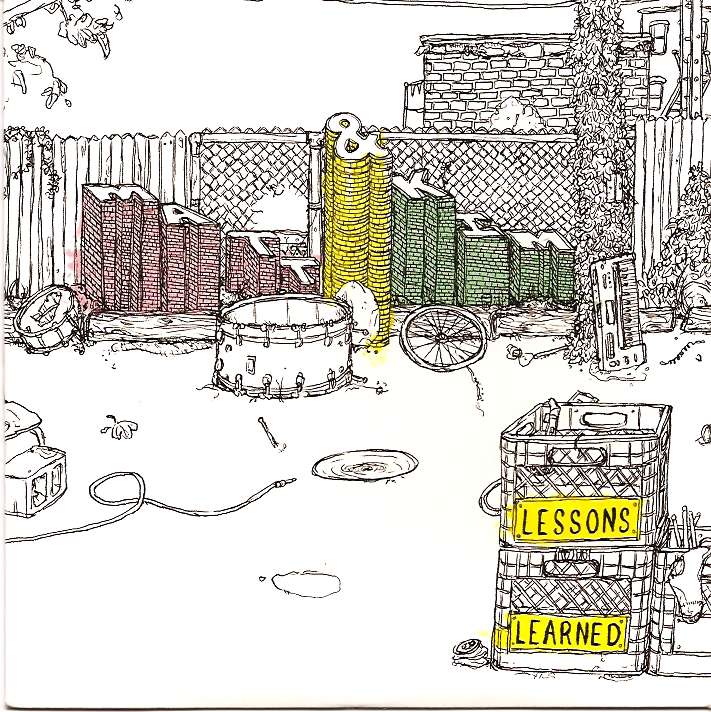
As for the A side, ‘Lessons Learned’, a mini symphony and the best video of the year, all at once. I’m probably the last person on earth to be writing about this clip – but I had to wait until there was an actual 7″ single, which thankfully now exists.

June 14th, 2009

Sonny Boy Williamson

sonnyboywilliamsonhelpme, Sonny Boy Williamson, Chess, Checker, Paul Jones, BBC 2

Listen: Help Me / Sonny Boy Williamson SonnyBoyHelp.mp3

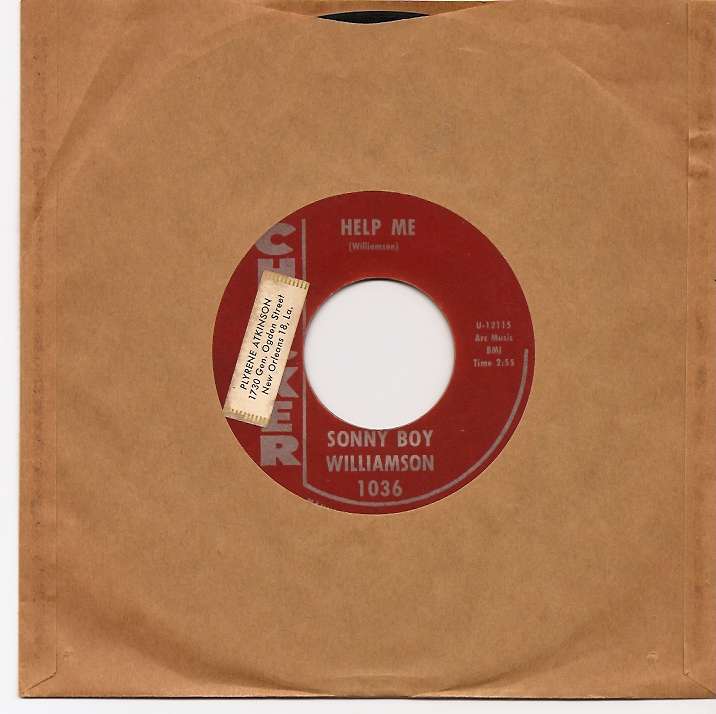
I wonder if Plyrene Atkinson misses this single – or maybe she upgraded to a cleaner copy, preferring a more recent Checker label design. Yeah right. I loved this copy when I stumbled on it in a Greenpoint junk store. The basement was FULL of records. Still is – but it’s been seriously picked. This was in 2001, just before 9/11. I spent several weekends in that basement. No one was buying the records, as the guy had loads of great chachkas, furniture, kitchen items and clothes on the ground floor level. Very few even ventured into the basement. I supplied him with boxes of promo cd’s which were selling like hotcakes, so all the 45′s came my way first.

The name sticker on the label, which I would usually remove, became a romantic attraction to another time – when blues would sell to the nooks and crannies of America, truly becoming the folk music of it’s day.

I never loved this record until Paul Jones played it on his BBC Radio 2 program. How did I not ‘hear’ this one years earlier? Before the day of streaming and/or archived BBC content, Roger Armstrong would religiously record both the Paul Jones show and SOUNDS OF THE SIXTIES onto DATs every Saturday, then drop them in the mail. Talk about a friend.

Still a BBC 2 fixture, Paul Jones is certainly the voice of authority when it comes to the blues. ‘Help Me’ was, well, an RnB hit actually, peaking at #24 in April ’63. It sure does sound good in a 1959 Seeburg 222.

June 12th, 2009

Don Covay & The Goodtimers

doncovaymercyuka, don covay, atlantic, the rolling stones

doncovaymercyukre, don covay, atlantic

Listen: Mercy, Mercy / Don Covay & The Goodtimers DonCovayMercy.mp3

I woke up one day realizing albums by The Rolling Stones serve as introductory encyclopedias for figuring out the best American RnB and Blues originals. I felt really behind the curve at that moment, but considering it was still 1969, I caught up ok. The band, or someone in their camp, had impecable taste when picking this stuff. I still read the occassional story of their early visits to the US, whereby they’d all flock to now infamous record shops in Harlem or East LA just to buy all the black releases. Man, those stores must have been amazing. And where are all those records now? There were plenty of those original US pressings amongst the Tony King collection…..

Don Covay entered my world via OUT OF OUR HEADS. The Rolling Stones started side one of the US version with ‘Mercy, Mercy’. OUT OF OUR HEADS was their fourth and final US album to pressed initially (first run only) in the UK, then exported to the US and sleeved here. Just recently have collectors been alerted to this detail, but for years I was buying up those UK copies at garage sales for $1. They are particularly easy to spot. The font is obviously different than US London labels, but they’re also deep groove, and they indicate ‘Made In England’. Quite helpful. A few other London releases during the era (’64 – ’66) were intially pressed in the UK as well: Marianne Faithfull, Tom Jones and Them.

When I worked at Island in the late 80′s, Chris Blackwell signed Don Covay, who came by regularly to see Holly Furgeson and her office was next to mine. She did the A&R admin, and Don Covay handled all his own business. I remember him working diligently on the project only to have it shelved, a bad habit Island always had.

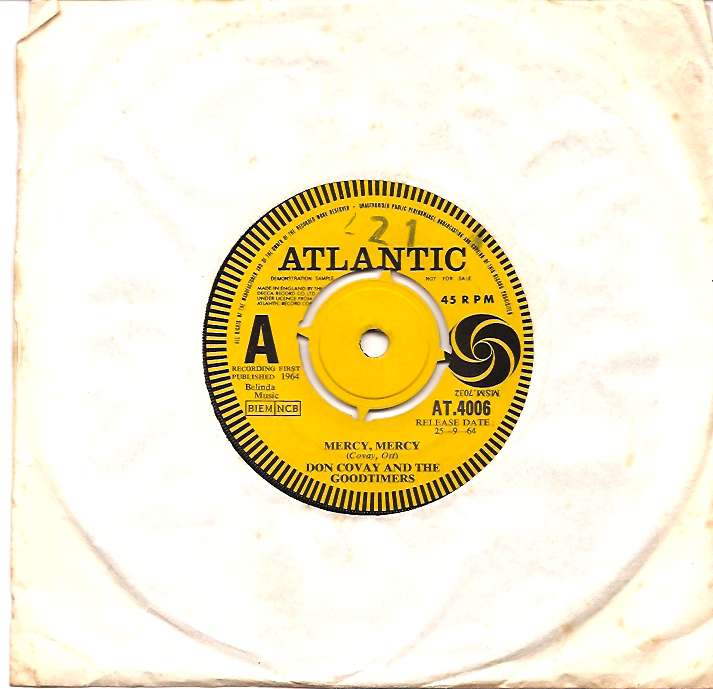
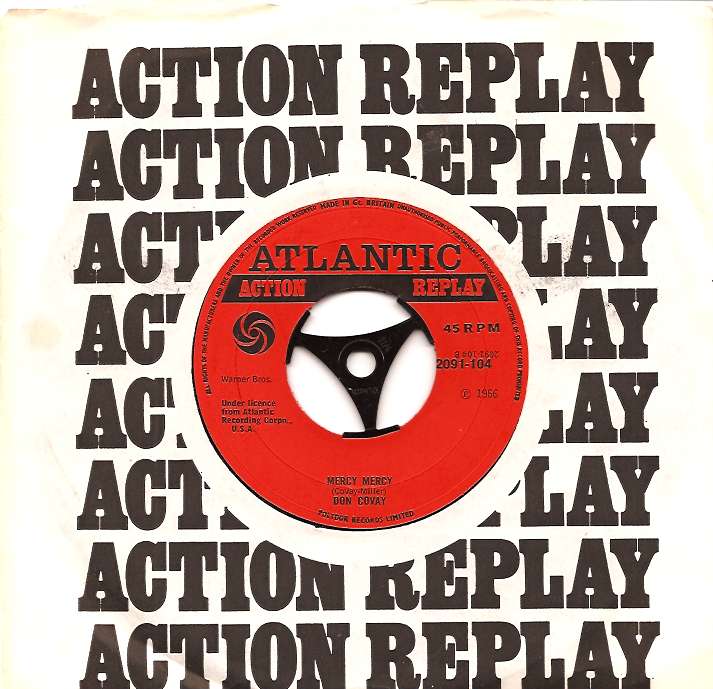
I was well pleased to find not only the original DJ copy of ‘Mercy, Mercy’ amogst Tony’s records, but a very nice UK reissue as well, both pictured above.

June 9th, 2009

Sugar Pie DeSanto

sugarpiedesantouk, sugar pie desanto, chess, checker, pye

Listen: Use What You Got / Sugar Pie DeSanto
SugarPieUseWhat.mp3

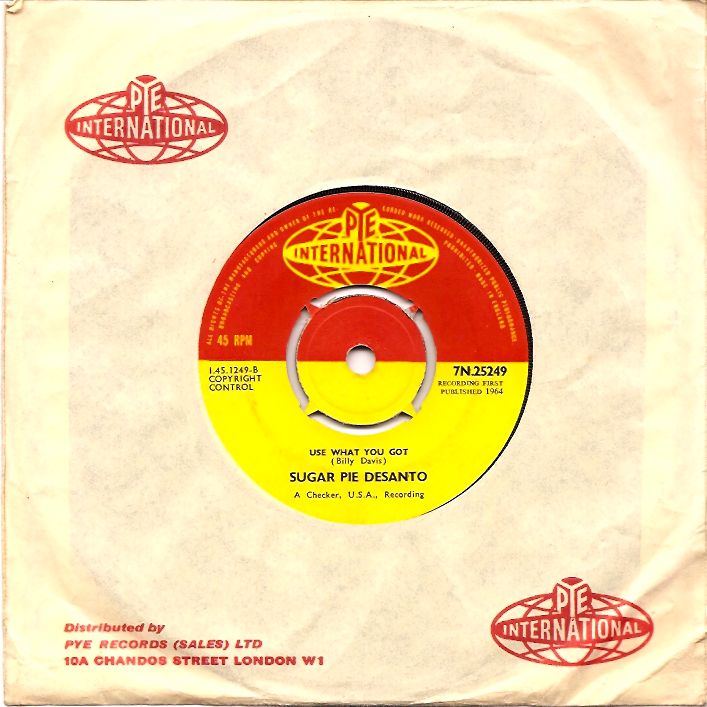
You need only get the new cd, GO GO POWER – THE COMPLETE CHESS SINGLES 1961 – 1966, open the booklet and begin your lusting for Sugar Pie DeSanto. The liner notes should be essential reading at Harvard, but they can’t touch the photos. She was more of a firecracker than I’d ever imagined. I missed out on seeing her during the heyday. Luckily, I did get to watch a still sizzling Sugar Pie DeSanto last fall at the Rhythm And Blues Foundation Awards in Philadelphia. Yum. Still hot.

Happily there are a bunch of must-haves amongst her Checker/Chess singles. The bump and grind vamp of ‘Use What You Got’ might be one the world’s greatest B sides. It started out as the A side in the States, but was flipped for the UK. This copy’s from the Tony King collection, it dips a toe into the vast pool of RnB pressings he amassed. Musically, not unlike The Cramps, or should I say they were not unlike Sugar Pie and the label’s house band: Leonard ‘Baby Doo’ Caston (organ), Gerald Sims (guitar), Louis Sutterfield (bass) and Maurice White (drums). Listen and you’ll see what I mean.

June 7th, 2009

THE TENNORS

Massi Massa / The Tennors

Listen: Massi Massa / The Tennors MassaMassa.mp3

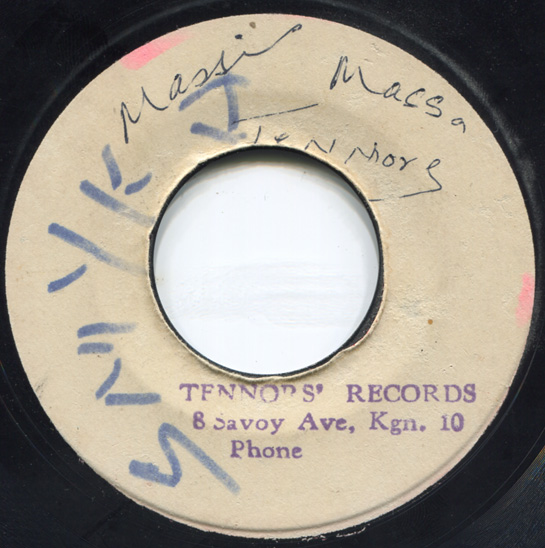
Originally called The Tennor Twins, the duo of George “Clive” Murphy and Maurice “Professor” Johnson, recorded first for Coxsone Dodd at Studio One. They are said to have auditioned for Dodd’s arranger Jackie Mittoo in the back of a cab to land their recording deal. As a result, they had the biggest hit of 1967 with the semi-rude ‘Pressure & Slide’, whose rhythm track would be recycled numerous times over the next 10 years. It was used for Prince Buster’s ‘Orange Street’, and Alton Ellis’ ‘Aint That Loving You’, as well as the Lee Perry track ‘Musical Doctor’ from his 1992 album recorded at Studio One.

The Tennors went on to have further rude hits thru the 60′s with ‘Ride Mi Donkey’, and ‘Rub Mi Khaki’, as well as this gem, ‘Massi Massa’. The story of country girls who move to town thinking they are going to become queens of society, only to find themselves homeless and miserable having had no idea that life could be so tuff. “Massi massa, massa me bwoy, I wonder why the time is so hard…” Something many of us can identify with these days.

Despite the rude slackness of their early releases, The Tennors went on to become a Christian reggae band who still perform today. Not sure if ‘Rub Mi Khaki’ is still in the set list.

Thanks for listening to and reading these for the last 2 weeks. Kevin starts back up tomorrow.

Duane

June 6th, 2009

NIGGER KOJAK / MADOO

Massacre / Nigger Kojak

Listen: Massacre / Nigger Kojak Massacre.mp3

Jamming So / Madoo

Listen: Jamming So / Madoo JammingSo.mp3

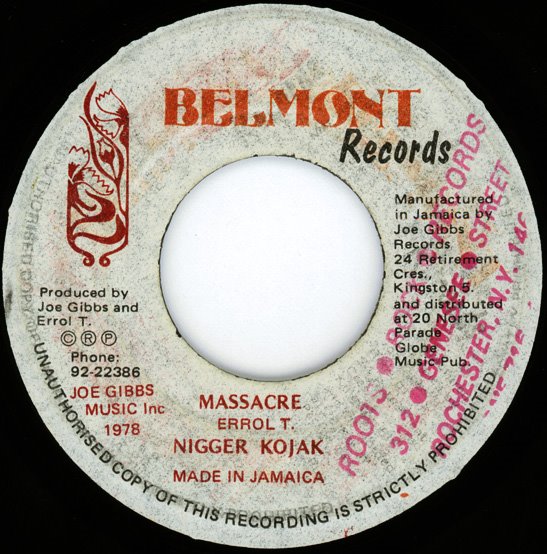
In 1978, I first heard ‘Massacre’ standing at the counter of Roots Rock Records, on Genessee Street on the funky side of my home town, Rochester, NY. If you were a regular, as I’d become, Jah Earl would play 30 seconds each of all the latest singles, as he stood with his back facing you, shuffling thru the vinyl and flipping them onto the turntables. He’d give each single 10-15 seconds and then he’d glance over his shoulder in your direction. If you seemed to be listening attentively he’d let it play a little longer, until he saw a reaction. If you seemed disinterested, he’d immediately flip to the second turntable and play the next record. If you were into to it, he’d slide a copy onto the pile he was building for you. He was also a sound system DJ so he had one of his huge bass cabinets with a blaring metal horn atop it sitting in the middle of the tiny shop and he’d crank it up until you felt it deep inside your rib cage. That was a real sales tool, since even records I didn’t care for sounded great in there. He kept a big open box of herb on the floor behind the counter, and the street youth would come in, give him $10, and he’d grab a handful, drop it on a copy of his store top ten chart, and fold it up for them.

‘Massacre’ is one of those singles that hit me immediately in that store, and still sounded good on my stereo when I got it home. Joe Gibbs house engineer Errol Thompson knew more about the important relationship between kick drum and bass guitar than any other reggae producer I’ve heard. The single was my introduction to Nigger Kojak, who also recorded a handful of other great gems for Gibbs in that period. A classic that springs to mind is ‘Hole In The Bucket’ which was edited into the Dennis Brown 12″, ‘Aint That Loving You’. Kojak knew how to ride a riddim with authority.

‘Massacre’ also tells the oft repeated story of the Greenbay Killing, a current event at that time which was mentioned in a number of records. An old timer retold the story to me about 10 years ago, and if I recall it correctly it is this: The Jamaican police had a top secret squad that was in charge of undercover narcotics investigation. This squad, posing as drug lords, arranged a midnite meeting of the leaders of all the drug gangs in an abandoned warehouse. When they showed up, the police squad killed them all and made it look like a gang shoot-out. It was all found out and became a scandal. “Greenbay killing a murder… Oh, Lord.”

It proved to be a popular riddim for obvious reasons – it’s great. In 1979, Gibbs halted a session with Dennis Brown to record an upcoming singer he’d just discovered over it. That singer was Madoo and this was his debut single, called ‘Jamming So’. Madoo was an early innovator who helped create the dancehall style of the coming 80′s. He walked that line between singing and toasting more gracefully than those before him, and his style was quickly embraced. He had great onstage DJ sparring matches with another rising dancehall star, General Echo, who was tragically murdered in 1980. After the death of his friend, Madoo drifted away from the DJ scene and into obscurity.

Duane

June 5th, 2009

LITTLE ROY / DILLINGER / PRINCE FAR I

Tribal War / Little Roy

Listen: Tribal War / Little Roy TribalWar.mp3

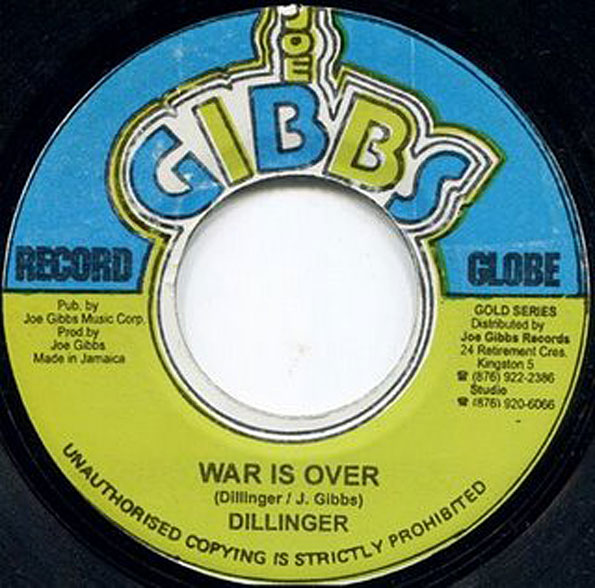
War Is Over / Dillinger

Listen: War Is Over / Dillinger NoMoreWar.mp3

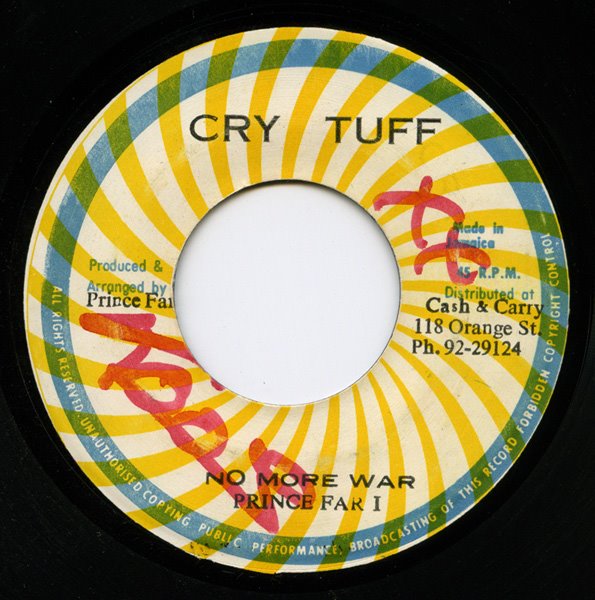
No More War / Prince Far i

Listen: No More War / Prince Far i NoMoreWarFari.mp3

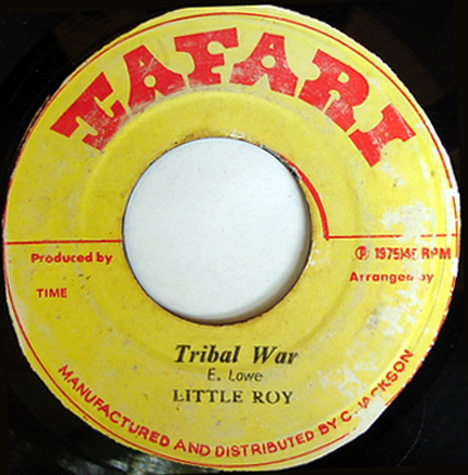
Little Roy hired Lee Perry to produce this 1974 single, about the peace treaty arranged between Kingston’s warring gangs, for Roy’s new Tafari label in Jamaica. The track was recorded and voiced at Perry’s new home studio, the Black Ark. Fueled by the pedal phased guitar of Roy Hamilton, with Pablove Love on keyboards, it also featured singer Dennis Brown playing bass and legendary drummer, Leroy Horsemouth Wallace, rounding out the rhythm section.

‘Tribal War’ was a hit and resulted in a number of successful cover versions, including heavily influencing Third World’s album track of the same name. But Little Roy’s understated original is the definitive one. Original pressings are scarce as hens teeth. I found a small scan of one on the web and worked it up to a viewable size as much as possible. Easier to locate is the Pressure Sounds reissue from earlier this century.

Dillinger’s Joe Gibbs released version, ‘War Is Over’, starts off with a heavy patois laden proclamation, declaring there has been a “Peace treat, so now ya haffa come out and get likkle fresh air…” “Peace treat…” what a great term. And in a nod to Kenny Rogers, he further states “Son, don’t take your guns to town”. It originally came out on the Joe Gibbs sub-label, Errol T., which featured the productions of resident engineer Errol Thompson. The label shown here is from the Joe Gibbs Gold Label reissue series.

Prince Far i’s version, ‘No More War’, directly confronts the warring parties with authority. “So you’re the one who come here to mash up this place, eh? Well, war is over… Natty dread come over.” Atop a low burning and minimalist roots-echo groove, the good Prince gives testament in his own deep voice of conviction. Self-produced & released on his Cry Tuff label in Jamaica.

Duane

June 4th, 2009

The Upsetters

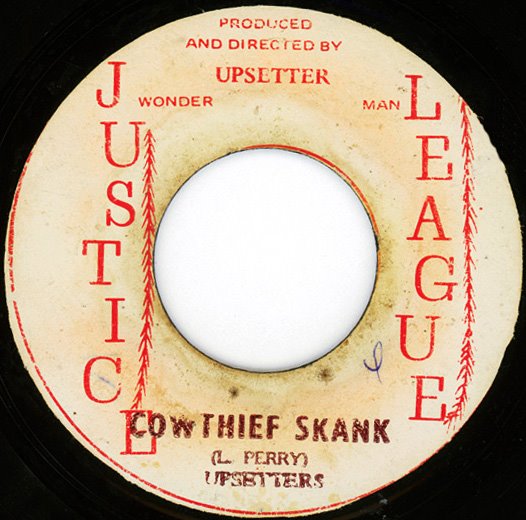
Cow Thief Skank / The Upsetters

Listen: Cow Thief Skank / The Upsetters cowthief.mp3

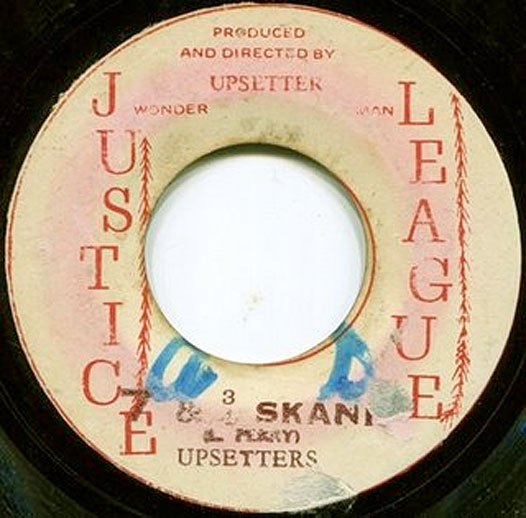
7 & 3/4 Skank / The Upsetters

Listen: 7 & 3/4 Skank / The Upsetters 834skank.mp3

Jamaican artists are the original recyclers of culture. Their lack of virgin vinyl to feed the record presses meant that every month the unsold singles got melted down to press into next months hopeful hits. So there was physical recycling, but they recycled content too. The versioning of popular songs originally started in the late 60′s with the dancehall clashes between competing DJs. If one had a hit on a certain riddim, you could be sure a week later the competition would have their own version out, looking to one-up the DJ with his own song. That tradition continues in full force today.

Lee Perry was one of the original innovators in a lot of what eventually became Rap/ Hip Hop, and the Brooklyn & Bronx style DJ/MC combos that defined the 80′s dance floors in the USA. Perry’s early sonic experiments led to a lot of that. Here’s an example from ’73. ‘Cow Thief Skank’.

It’s literal splicing together of two rhythm tracks that had nothing to do with each other was unheard of at the time, but that approach would come to fuel the early hip-hop sound collaging DJ’s a decade later. ‘Cow Thief Skank’s original rhythms are instrumental versions of ‘Musical Transplant’, and ‘Better Days’. And for equally odd reasons, a little disco reggae thing is stapled onto the beginning of the track, snipped from ‘Stand By Me’ by The Inspirations. The end result is something that both feels like it fits & feels like it doesn’t fit. A truly unsettling record. Listen to the dub version to really hear a further version of what’s going on with that razor blade.

Charlie Ace is the vocalist, and he tells the legend of fellow producer, Niney. In it, Niney is caught stealing a cow and farm justice is served, heavy manners style, when Niney’s finger is cut off. That’s how he got he name Niney. Scratch can be heard chanting “Cow Thief Skank” in the background, before joining in the story.

The cows-mooing vocal was the debut of an effect he would call upon in later Black Ark years. These recordings, however, were made in the year before the Black Ark was built, in Kingston studios like Dynamic.

Duane

June 3rd, 2009

THE GATHERERS / PRINCE DJANGO

Words / The Gatherers

Listen: Words / The Gatherers Words.mp3

Hot Tip / Prince Django

Listen: Hot Tip / Prince Django HotTip.mp3

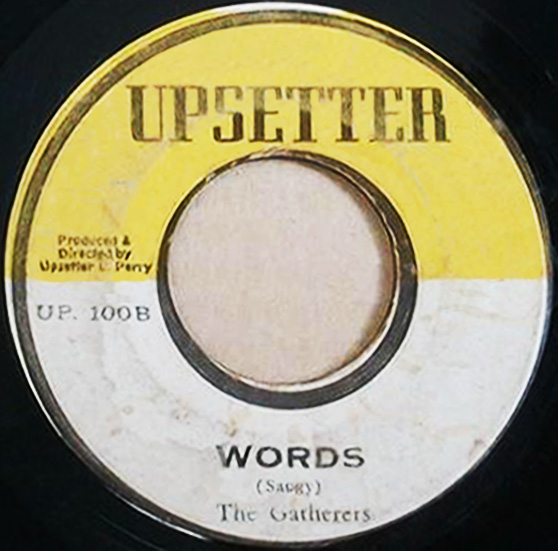
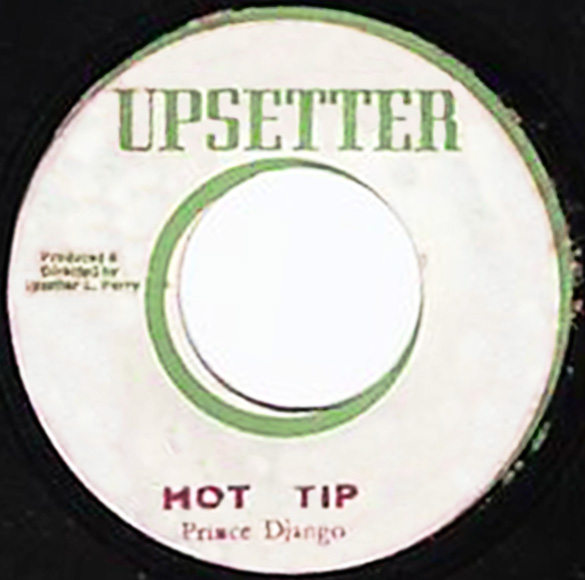
Another highlight from the career of Lee Perry…

In 1973 Perry was working at Dynamic Studios when The Gatherers were brought to meet him for the first time. He was so impressed and excited, he recorded them on the spot. ‘Words Of My Mouth’ (its formal title) was one of the songs they did. It was to become one of his most famous songs, and also most enduring rhythms. He remixed and re-vocaled it countless times over the next few years, I know of ten distinct remixes.

Released as a single quickly after ‘Words…’, the first DJ verson was ‘Hot Tip’, a scorcher that starts off fighting, with Scratch admonishing a young studio upstart. The squabble is brought to an end by the quick snap of a rolling timbale intro. Prince Django, delivers the goods with his promise of a ‘Hot Tip…’ but the instrumental section in the middle gives opportunity for the argument to start up again, with Scratch warning the youth to “Step back, Jah!”

A version of ‘Hot Tip’ was included in an altered form on the ground-breaking BLACKBOARD JUNGLE DUB LP, in its original wide stereo first pressing edition. Titled ‘Kasha Macka Dub’, it is largely a dub version, lacking most of Django’s verbal gymnastics.

Both tracks have a very much Black Ark studio sound, yet both were recorded several years before that studio was built.

Duane

June 2nd, 2009

ERROL DUNKLEY

Please Stop Your Lying / Errol Dunkley

Listen: Please Stop Your Lying / Errol Dunkley PleaseStopYourLying.mp3

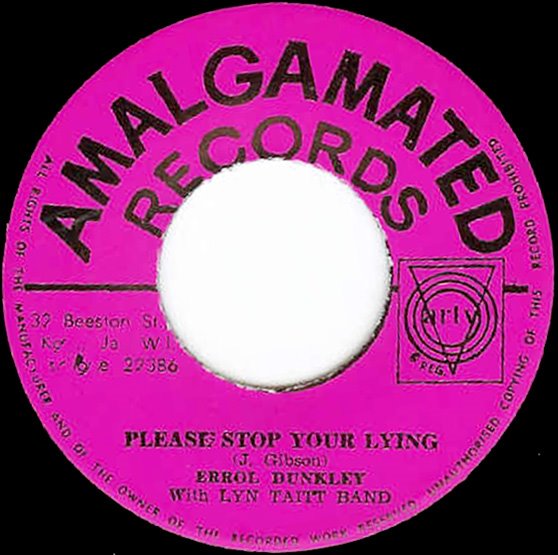
This is a record from the career of Lee ‘Scratch’ Perry.

By the late 60′s, Lee Perry’s career had taken him from his ska days as runner and studio assistant with Sir Coxsone Dodd at Studio One, and onto his own with his first self productions. In fact, I believe this is actually his first. He had become a house engineer for Joe Gibbs and when the rock steady sound became big, Gibbs made Perry the in-house producer for his new Amalgamated label. Many of those early Amalgamated rock steady gems were Perry produced, tho he was not credited.

‘Please Stop Your Lying’ is also the first single for the teen-aged Errol Dunkley who would go on to success in JA & UK thru the 70′s. This track slow-burns from the moment it starts, with great horns, and equally great low note guitar picking. There’s a perfect swing in the band’s playing for Errol to step lightly over. It commands you to the dance-floor and shows that right from the start Perry knew how to set the stage for a great performance to be captured.

Duane

June 1st, 2009

THE PARAGONS / DR. ALIMANTADO / KING TUBBY

Quiet Place / The Paragons

Listen: Quiet Place / The Paragons AQuietPlace.mp3

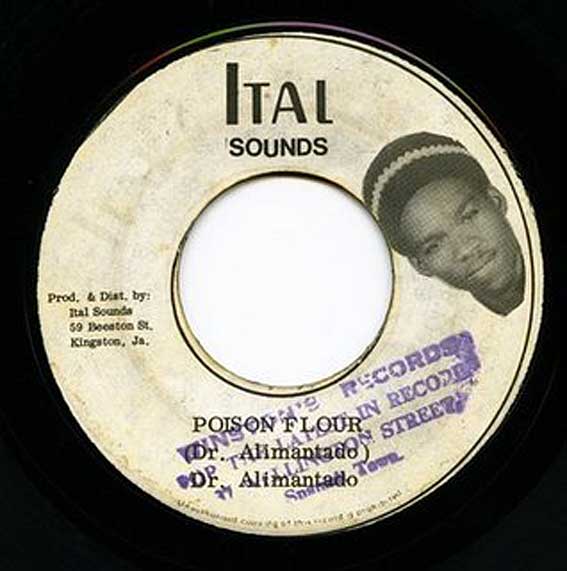
Poison Flour / Dr. Alimantado

Listen: Poison Flour / Dr. Alimantado PoisonFlour.mp3

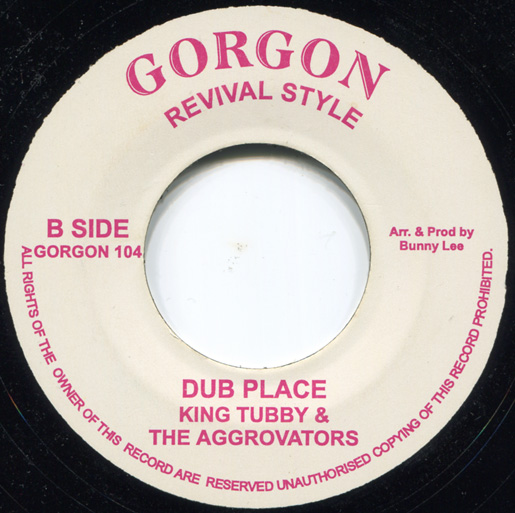
Dub Place / King Tubby

Listen: Dub Place / King Tubby DubPlace.mp3

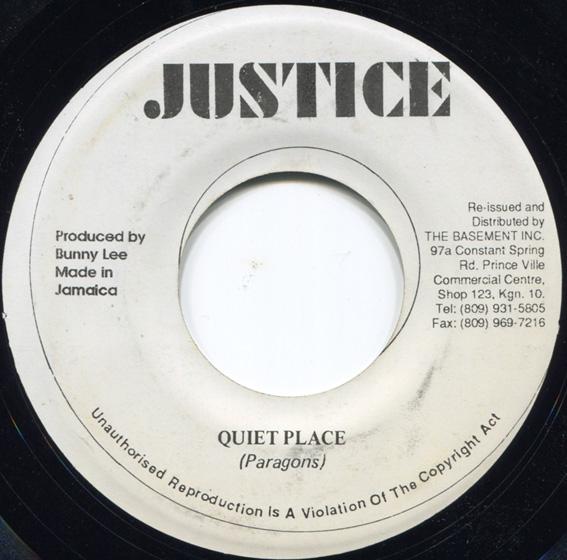
‘Quiet Place’ is the original name of the oft covered Jamaican fave – ‘Man Next Door’. Same song, it just acquired a different name over the years. This is the original version by The Paragons, who came from the late rock steady period, into early reggae with tight pop harmonies like those showcased on this mid-70s track. The late ’70s roots era cover of ‘Man Next Door’ by Horace Andy is probably the best known remake, tho Dennis Brown had a famous version too.

An interesting side note for Rochester readers of this blog, The Paragons original version 7″, plus DJ mixes with I Roy & others, were released in this country on the Andy’s label from the Bronx. In the aftermath of the riots & fires of the Bronx in ’77, Andy left the Bronx & moved his record store to Rochester. Many of us old timers up there got our 1st Jamaican records from Andy.

Andy's record label

‘Poison Flour’ is Dr Alimantado’s toast on the Horace Andy version. In it, the good Doctor retells the old timers story of a poison flour plague that killed a lot of people back in the olden days. He calls the proceedings to order straight off… “What the time you have there, dread?” The answer, “12:00 Natty!”

‘Poison Flour’ is followed by a wicked King Tubby dub of the same Horace Andy take, found on the b-side of his Bunny Lee produced 7″. In it, Tubby shows off his trademark EQ shifting flange effects, as well as his penchant for reaching under the mixing board & giving the huge spring reverb unit a good swat. Tubby’s voice almost never appeared in his mixes, but this record is an exception. He can be heard at the start yelling “Rolling…”

3 great tracks – All Killer, No Filler!

Duane

May 31st, 2009

JOE HIGGS

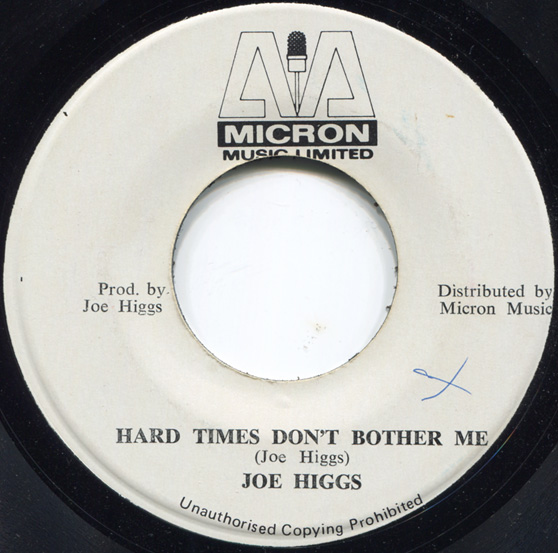
Joe Higgs / Hard Times Don't Bother Me

Listen: Joe Higgs / Hard Times Don’t Bother Me HardTimes.mp3

Joe Higgs was a seminal artist from the early days of ska, thru the heady days of Rastafarian reggae into the 80s, and a popular singer up until his death in late 1999. He had early hits with Roy Wilson under the duo name of Higgs & Wilson in the ska days, taught a young Bob Marley how to sing, and became a member of the Wailers during their 1st tour of America when Bunny Wailer got arrested for ganja possession just before they left.

His mid ’70s album, LIFE OF CONTRADICTION, is one of the 10 essential reggae albums any collection needs. It set a unique standard for song writing & production, featuring the intricate guitar work of a visiting Eric Gale, from America. With a voice that made the ladies swoon, every track on that album was a winner. It was released on Micron in JA and, in a slightly altered & muddier version, on Grounation in the UK which was the version reissued on CD by Pressure Sounds a few years ago. ‘Hard Times Don’t Bother Me’ is from that album, which also included an updated version of ‘There’s A Reward’, his early ’60s Higgs & Wilson ska hit.

Duane

May 30th, 2009

KING STITT

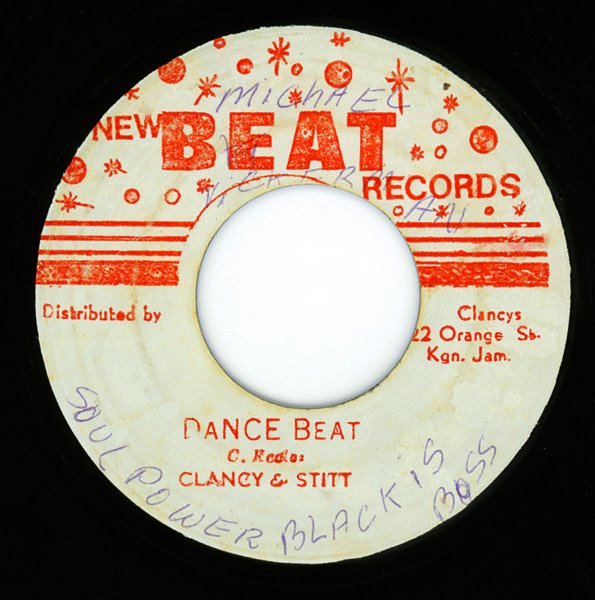
King Stitt / Dance Beat

Listen: King Stitt / Dance Beat DanceBeat.mp3

King Stitt is the oldest living Jamaican DJ today, having begun in the late ’50s deejaying on Coxsone Dodd’s Downbeat Sound System. His break came when he was given a chance on stage by Coxsone’s reigning DJ, the legendary Count Machuki. Back then, the sound systems only ran one turntable so the DJ would fill the moment of silence between tracks with public service announcements and other patter, etc. As time went by, the competitive nature of the DJ’s meant they got more original and humorous as they began rhyming and clowning around. This led to them talking over the records, which led to singles coming out with instrumental versions on their  B sides in the hopes that it would seduce the DJ to play it so he could toast over it.

Stitt had his own style of delivery, as well as a distinctly memorable voice. Facially deformed at birth, he took his nickname “The Ugly One” from the popular movie of the day THE GOOD,THE BAD AND THE UGLY. He had Clancy Eccles produced hits with ‘Herbsman Shuffle’, ‘Vigarton’ and the track featured here – ‘Dance Beat’. In it, he recalls the days of the great dance clashes at Forrestors Hall and other places, name checking Machuki as he remenices in a back and forth with Clancy.

Duane

King Stittt

photo: King Stitt, back in the day

May 29th, 2009

BOB MARLEY & THE WAILING WAILERS

Pound Get A Blow / The Wailers

Listen: Pound Get A Blow / Bob Marley & The Wailing Wailers PoundGetABlow.mp3

Funeral / The Wailers

Listen: Funeral / Bob Marley & The Wailing Wailers Burial.mp3

The Wailers got their start with Coxsone Dodd at Studio One in the early 60′s, singing doo wop and RnB covers, along with songs written in the new ska style. They had a good bit of success but it was a problematic relationship. In the 60′s, blacks around the world began to embrace their African heritage, and for The Wailers this led to the beginnings of their Rastafarian beliefs. Dodd was not a Rasta and, like Duke Reid over at the other big label, Treasure Isle, he didn’t allow Rasta themes in his records. Also, the financial benefits of their hits never fully came their way, as is so often the case in the Jamaican music industry. Despite a successful ska career, and having a handful of hits, by the mid 60′s, Bob Marley was essentially homeless and sleeping in a back room at Studio One. It was then that he decided to go to America, to live with his mother for a while and make some money, before returning to Jamaica to fund the next phase of the band.

After a stint in Delaware, working the night shift in an automobile factory, Bob had saved some money. But it was the American military’s decision to begin drafting young men to go to Viet Nam that made him decide it was time to return to Jamaica.

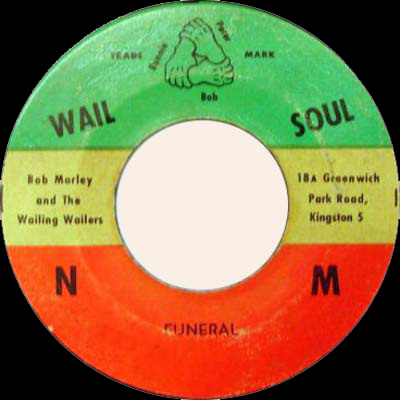
On his return he reunited with The Wailers, Bunny Wailer and Peter Tosh, to form their own record label and they called it Wail N Soul M. Its logo illustrated their three arms interlocking in unity. They set up a little record shop across the street from a cemetary, and used to go to the funerals there. Just to go to them… don’t ask me why. Maybe that’s where the inspiration for the B side of this early single came from.

The A side, ‘Pound Get A Blow’, was the story of global currency troubles and the way they ripple thru a society. Bob and Peter trade lead vocals on this, and at one point, Bob really croons. Peter sings lead on the B side, ‘Funeral’, with Bob’s new wife Rita singing backup. The band included JA session masters such as Dizzy Moore and Tommy McCook on horns, Hugh Malcolm on drums and Jackie Jackson on bass. Both tracks were recorded at in late ’67 at West Indies Studios, and self produced by The Wailers. To my ears they more than stand the test of time.

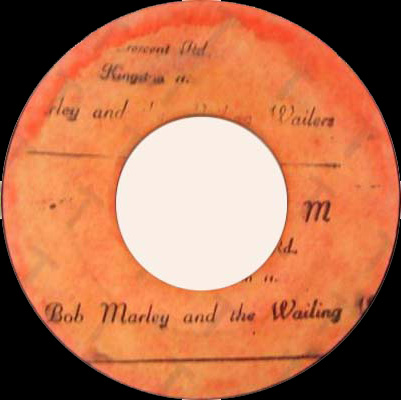
Two labels are shown here and they help illustrate the path a Jamaican single normally took. The first pressing would be a white label, with info either rubber stamped on it or hand written. These small quantity pressings were sold to the many DJ’s for sound system use. Then, if the record was popular enough at the dances to be worth a retail release, they would invest in printing real labels for the formal pressing.

Duane

May 28th, 2009

OWEN GRAY

Millie Girl / Owen Gray

Listen: Millie Girl / Owen Gray MillieGirl.mp3

Owen Gray is one of those guys who lived thru the greatest period of Jamaican music. A graduate of the famous Alpha Boys School, whose music program made superstars out of so many street urchin kids, he started out in the big band R&B days of the late 50′s, made the graceful transition to ska without losing any of his heat, and continued to put out records thru the 60′s, 70′s, & 80′s. He moved over to gospel and more easy listening type stuff as he got older, but these early gems still hold the ability to tingle the ears.

I first heard of him on a home made cassette that the infamous Lucky Gordon (of the UK Profumo scandal in the 60′s fame) recorded for Corinne back in the early 90′s. That’s a story in itself. ‘On The Beach’ was the Owen Gray track that hit me first, and it set off an instant search that lasted for several years before I could locate even a scratchy copy with its label scrubbed off.

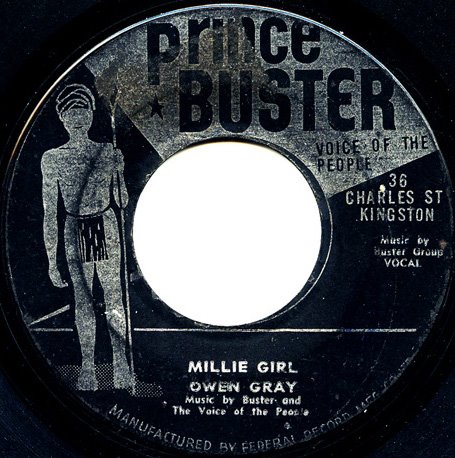
He did some early RnB singles with Prince Buster at the helm, and this one is a fave. Man oh man, what a good looking record label… silver on black. ‘Millie Girl’ features that slow tugging Louisiana RnB shuffle rhythm that formed a perfect bed for a Jamaican vocal. You can hear the seeds of reggae in it. This was the beat that would speed up a few years later and introduce the world to ska.

May 27th, 2009

JUSTIN HINDS & THE DOMINOES

Botheration (Ska) / Justin Hinds & The Dominoes

Listen: Botheration (Ska) / Justin Hinds & The Dominoes
BotherationSka.mp3
Botheration (Rock Steady) / Justin Hinds & The Dominoes

Listen: Botheration (Rock Steady) / Justin Hinds & The Dominoes BotherationRckStdy.mp3

Justin Hinds & the Dominoes were one of those unique & ethereal rock steady bands who first hit in the ska era, then successfully migrated straight thru to roots reggae in the late ’70s. Led by Justin Hinds clear & distinctive lead vocals, with the tight harmonies of the Dominoes – Dennis Sinclair & Junior Dixon, they released the first pop records that openly mixed rasta ideology into their lyrics, infusing a deep spiritual sensibility into their infectious pop hooks.

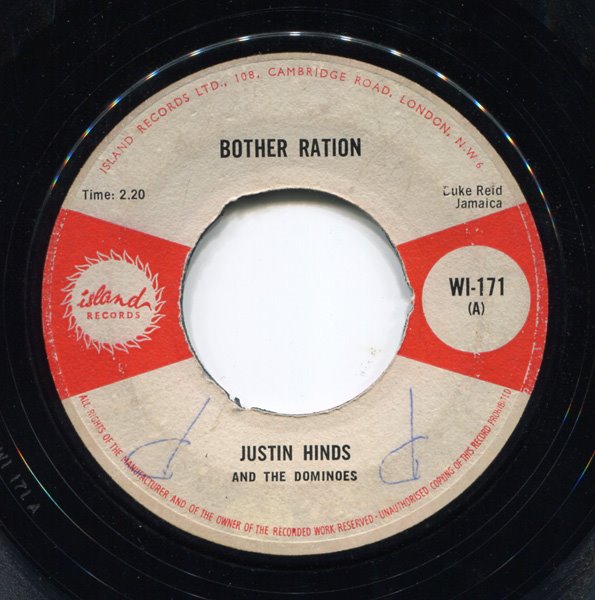
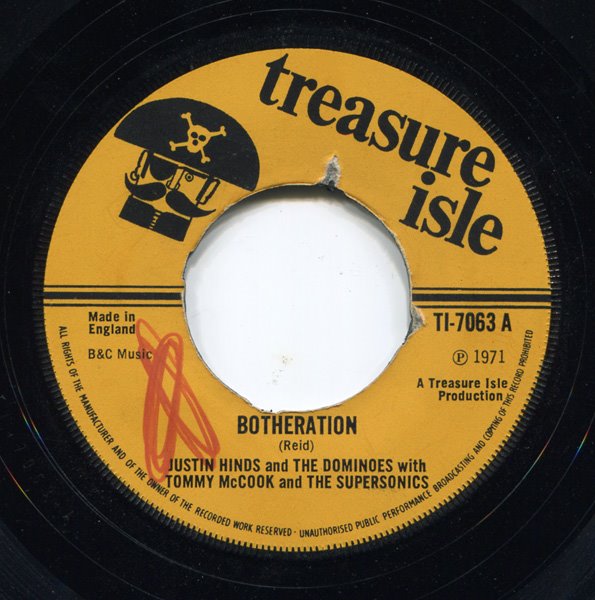
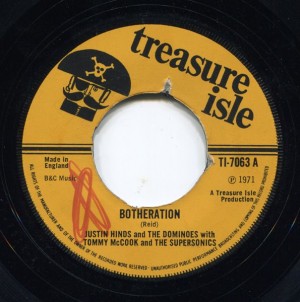
In Jamaica, it became common for an artist to re-record popular material from earlier in their careers. Burning Spear did it, as did Bob Marley on the KAYA album. Justin Hinds (later known in the UK as Hines) re-recorded several of his hits over the years, as well. 2 such versions of ‘Botheration’ are presented here. He also released ska, rock steady, & roots versions of his hit, “Carry Go Bring Come”, over the course of his career.

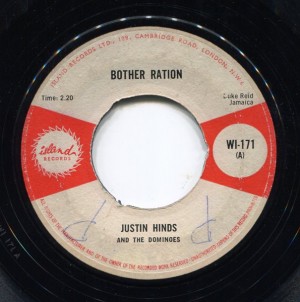
Released in 1965, Botheration makes for a good military style ska track, with its pumping “forward charge” horns. It was released in Jamaica on Treasure Isle & licensed to Island in the UK, as shown here.

It’s equally effective in its rock steady version from the 1971, with a Hammond organ replacing the horns & Justin’s more soulful delivery. Both ska & rock steady versions are Duke Reid productions.

Mr. Reid, a former cop, used to wear a gun belt & pistol everywhere he went. He was a fierce competitor, and an intimidating force to be dealt with. In the mid ’60s, he had Stranger Cole record & release a hit single called Ruff & Tuff, written by a then unknown & uncredited young Lee Perry. When Perry showed up to complain & seek his share of the profits, Reid punched him in the head so hard he knocked him out cold. Justin Hinds & the Dominoes stayed with Duke Reid for about a decade, resurfacing in the mid ’70s when they began to record heavier roots oriented material with Jack Ruby, releasing the brilliant JEZEBEL album, among others.

In the mid-90s Hinds & the Dominoes played a rare show in NYC at Tramps that is forever burned in my brain. Only about 150 showed up, but that didnt matter. The band was filled with elderly JA session legends who came out first & played a 20 minute instrumental tribute to Don Drummond, the Studio One trombone star who died in prison after murdering his girlfriend. Then Justin Hinds & the Dominoes came on & played a showcase of all their hits, basically in order, starting with the blistering ska single “Over the River”, thru their Rock Steady hits like “Save a Bread” & “Sinners” thru to their roots hits such as “Dip And Fall Back”, “Fire is a Desire” and “Prophesy Must Fulfill”, all complemented by the troop of nyabinghi drummers seated at the left of the stage.

Wick-edd.

Justin Hinds passed away in 2005.

Duane
May 26th, 2009

JACKIE MITTOO

Home Made / Jackie Mittoo

Listen: Home Made / Jackie Mittoo HomeMade.mp3

One of the most fun things about collecting reggae singles for the last fifteen years, has been how scant the information about many of these recordings is. That some records even exist is sometimes surprising. It didnt help that often the completely wrong label was applied at the pressing plant. And there was also very little formality in the record keeping depts of most JA labels, which is probably what helped keep so many artists from ever seeing any of the money their releases made.

So it’s much more of a detective game, collecting this stuff, than rock records. Unlike rock, there were very few discographies on reggae around until just recently with the web. Before that, you would buy home made bootleg cassettes on the street & scour them for good things to then seek out on vinyl. And to find the few discographies that existed, you would have to hunt & buy them in little 4th generation xeroxed booklets from the few reggae shops that were around, or order them thru the mail.

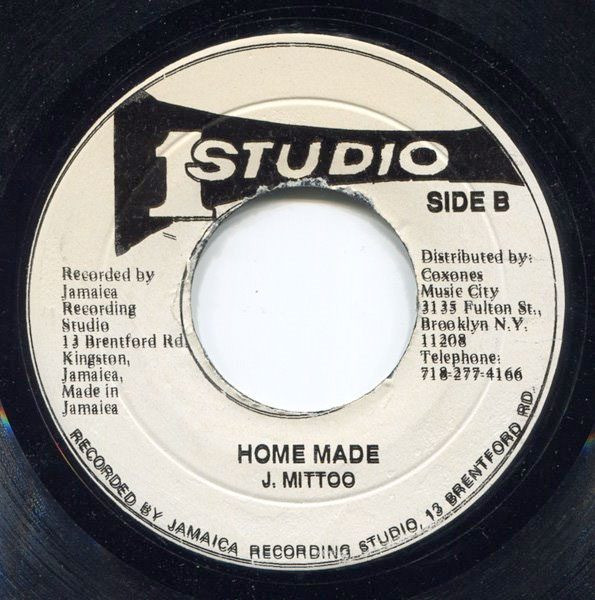
So I don’t know much about this single, except how much I like it. The little info available seems to suggest it was recorded in the late 60s, but who knows if it was released at that time? Coxsone Dodd’s Studio One was home to Jackie Mittoo for most of his career. He was a session keyboard player on most of what passed thru those doors until ’68 when he moved to Toronto, tho he still returned for session work. The band behind Jackie is The Soul Vendors. He was a member of all of Studio One’s legendary house session bands in the ’60s, not just The Soul Vendors, but The Skatelites, The Soul Brothers, and The Sound Dimension.

‘Home Made’ is an instrumental that can also function a bit as a resume of hits he’d played on for Coxsone. In it, he circles around riffs from the Wailers “Rudie”, and The Maytals “Bam Bam”, among others. Sounds like it was recorded live in the studio, as many hits were back then.

Original pressings of this kind of thing are next to impossible to run across, even on ebay. If you see one, you may be seeing it for the first & last time in your life. Often when reissued, a Studio One single will have a different b-side. I looked this one up & its only ever listed by this matrix & with this b-side (The Ethiopians – “I’m Gonna Take Over”) so it may be an original. I really have no idea.

Duane
May 25th, 2009

PRINCE BUSTER

Ain't That Saying A Lot / Prince Buster

Listen: Ain't That Saying A Lot / Prince Buster AintThatSaying.mp3

There is more to say about Cecil Bustamente Campbell, aka Prince Buster, than there is time to write about him. His influence on the history of Jamaican pop music is undeniable. He was the first to bring a Nyabinghi Rasta drum troop (Count Ossie & The Wariekas) down from the hills & into the studio to provide African percussion on his debut single production, ‘Oh Carolina’ / ‘Chubby’ for the Folkes Brothers in 1960. He went on to be at the forefront of the music scene when Jamaica gained her independence in 1962, and the country took as its musical signature, a shuffle rhythm & blues beat heard on the radio from New Orleans. They sped it up & created ska. His biggest hit was ‘Ten Commandments From Man To Woman’ in ’67, which was even a minor hit here in the USA. He continued making & releasing music into the ’70s, and still plays the odd one off gig today. (‘tho he stiffed the sold-out NYC crowd I was part of in the late ’90s, by coming into town but then not showing up at the club).

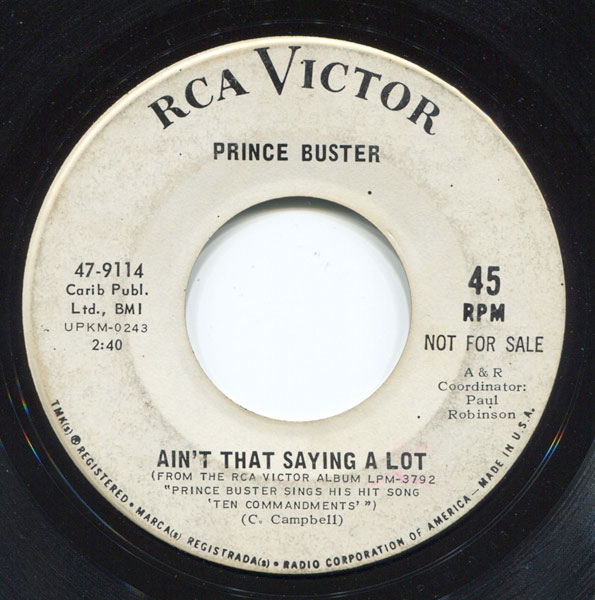
While I think I recall hearing the ‘Ten Commandments’ on Top 40 radio in the 60′s, and heard him memorialized by The Specials & Madness in the late ’70s ska revival days, I didn’t really get turned on to Prince Buster until the early ’90s. I was junk shopping on Canal St in NYC. An old Jamaican junk dealer had a little cassette player on his table & was playing a home made tape of his fave Prince Buster songs. My ear kept getting drawn to the tape player as I poked around his stuff, & so I asked him who it was. Minutes later, I’d talked him into selling me the tape. No song credits, nothing written on it but “Prince Buster Mix” in ballpoint blue. One song stood out for its smooth vocals, fantastic drum sound, and the uncommon addition of a violin. I don’t think I’ve ever heard a violin in reggae since. I went on a mission to find out what that song was. Only about half of it was on the tape.

Some years later I was on a video shoot in Tennessee, where a hurricane had turned our location into a rainy swamp. As a result we had the day off, so we went into the little town to poke around. I found a mint copy of Prince Buster’s TEN COMMANDMENTS LP for $6.00 in a little thrift store. When I got back to Brooklyn & played it, there was my unnamed song – ‘Aint That Saying a Lot’. A few years later I was in a garage sale with Kevin when I found a white label 7″ of his followup single, ‘Ten Commandments From Woman To Man’. Flipping it over I was delighted to find that my fave track had made it to a B side.

Duane

May 24th, 2009

The Ikettes

Listen: What’cha Gonna Do / The Ikettes Ikettes.mp3

May 24, 2009: one year since the launch of and first ever post on SO MANY RECORDS, SO LITTLE TIME.

What better way to celebrate the occasion than:

1) Improve the blog by creating expansion abilities to include new features over the next few months. And to achieve that, we’re moving to our own .com (bookmark this new address please):

SOMANYRECORDSSOLITTLETIME.COM

2) Re-post that original entry from May 24, 2008. The Ikettes / What’cha Gonna Do (music above/text below)

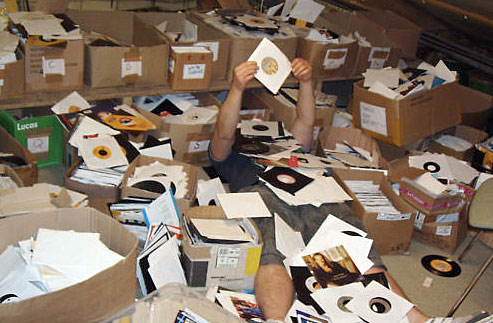
3) Take a week off. Never one to sit still, I’m going to Europe with Matt & Kim – and also acquiring one sick ass 45 collection in London – lots of amazing new records to write about as a result. My dear friend, and ska/reggae expert/addict Duane Sherwood will be filling in for the next week or so. Watch for his first post tomorrow!!!!

ORIGINAL POST FROM MAY 24, 2008:

The Ikettes only Phi-Dan release came out in early ’66. This was around the time of Phil Spector’s involvement with Ike & Tina, not just producing, but also including them on his Big TNT Show, filmed in November of ’65. The lineup on this record, courtesy of the fantastic booklet from Ace Records recent Ikettes anthology, CAN’T SIT DOWN….’COS IT FEELS SO GOOD, was PP Arnold on lead vocals, with Tina, Brenda Holloway and her sister Patrice on backgrounds. I’m launching this blog with The Ikettes simply because it’s a record I’m currently nuts about. Actually, right now, I’m in a serious Ikettes phase, fueled by the aforementioned CD. I was in London last week with Matt & Kim, and staying with Roger Armstrong, a great friend who founded and owns Ace. It was one of the discs he gave me, and I just poured over the booklet on the entire flight back home to New York. The CD is a must. And also try finding this single (the CD only draws from their releases on Modern Records). As you can hear, it’ll be worth the search. I picked it up off eBay a few months back having had no idea it existed. $65 later, it’s one of those great moments when you realize there’s always something else that needs to be added to the collection.